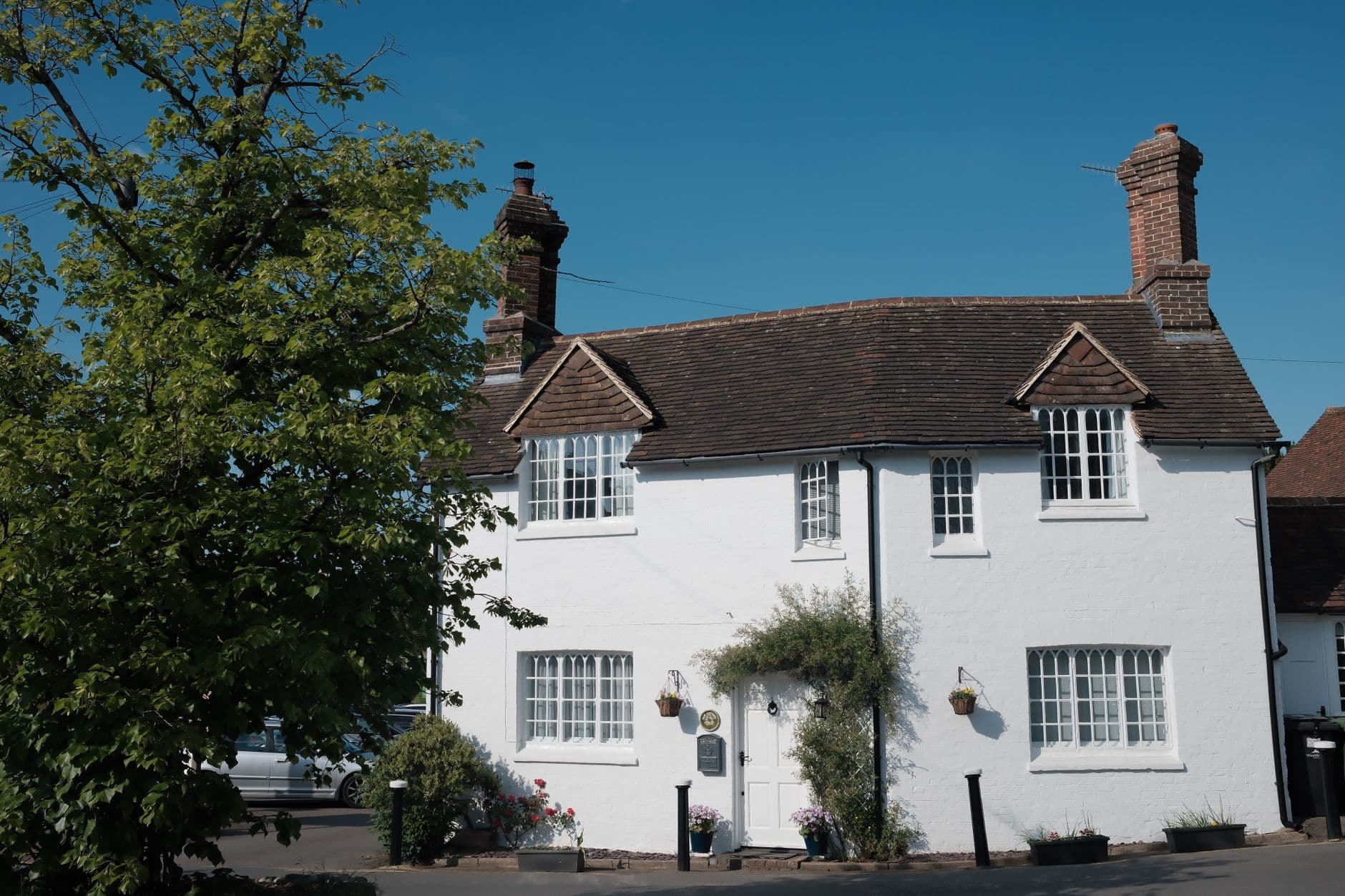

What a Bad Cap Looks Like From the Ground
A chimney cap is a small piece of hardware, but when it fails or goes missing, the symptoms rarely stay confined to the roofline. They show up as water stains near the ceiling, sounds coming from inside the flue, smoke behaving strangely on windy nights, and debris where it has no business being. For homeowners across Thousand Oaks, Camarillo, Oxnard, Ventura, and Santa Paula, learning to connect these symptoms back to the cap saves a lot of guessing about what is actually wrong.
This guide works through the symptoms a failing or missing cap produces, what each one means, and what a technician checks to confirm the diagnosis.
Symptom: Water Staining Near the Fireplace or on an Interior Wall
What it looks like: discoloration on the ceiling near the chimney chase, staining on the wall behind the firebox, or a damp smell that shows up after rain.
What it means: Water is entering somewhere at the top of the chimney and working its way down. A missing or damaged cap is the most common cause, since it leaves the flue opening directly exposed to rain. But staining alone does not automatically mean the cap is at fault, a cracked crown can produce nearly identical symptoms.
What gets checked: A technician examines both the cap and the crown together, since distinguishing between the two determines whether the fix is a cap replacement, a crown repair, or both. Water tends to leave a track that points fairly clearly to its actual entry point once someone is looking closely.
Symptom: Scratching, Chirping, or Movement Sounds From the Flue
What it looks like: noises coming from inside the chimney, especially in the early morning or evening, sometimes paired with a musty or animal odor.
What it means: Something has found its way into the flue. Birds, raccoons, and squirrels all treat an uncapped or poorly screened chimney as shelter, and in neighborhoods across Thousand Oaks that back up to open space and oak canyons, this is a regular occurrence rather than a rare one. Bats are less common but do occasionally roost in taller flues.
What gets checked: The mesh screen on the existing cap, if there is one, gets inspected for holes or gaps large enough for entry. If no cap is present, a camera check confirms whether anything is currently inside before cleanup or capping work begins.
Symptom: Smoke Blowing Back Into the Room on Windy Evenings
What it looks like: a fire that drafts fine on calm nights but pushes smoke back into the room whenever the wind picks up.
What it means: This is a downdraft, caused by wind crossing the top of the chimney and creating pressure that forces air back down the flue. Certain cap designs are built specifically to prevent this, redirecting wind flow so the opening stays clear regardless of wind direction. A missing cap, or one with inadequate height above the flue opening, leaves nothing to interrupt that pressure.
What gets checked: The current cap design and its height relative to the roofline, along with overall chimney height, since a chimney that sits too low relative to nearby rooflines or trees is more prone to downdraft regardless of cap type.
Symptom: Leaves, Twigs, or Debris Inside the Firebox After a Windy Stretch
What it looks like: dry plant debris accumulating inside the firebox or visible in the flue opening, especially after a period of strong wind.
What it means: Without a properly screened cap, wind carries debris straight down the flue. This is a routine finding in Thousand Oaks, Newbury Park, and Moorpark, where open space and oak woodland sit close to many properties. Beyond the mess, dry debris sitting in a flue is a fire risk in its own right.
What gets checked: Whether a cap is present at all, and if so, whether the mesh has gaps or has come loose from its mounting.
Symptom: Visible Rust, Tilt, or Loose Mounting on the Cap Itself
What it looks like: a cap that looks corroded, sits at an angle, or wobbles when the wind blows.
What it means: The cap is reaching the end of its service life or was not mounted securely to begin with. Material matters here. Galvanized steel caps are the least expensive option but corrode fastest, especially near the coast in Camarillo and Oxnard. Stainless steel holds up far longer under the same conditions and has become the standard choice in this area for that reason. Copper is a longer lasting option that develops a natural patina over time and is a common sight on the older masonry chimneys found in Ventura and Santa Paula.
What gets checked: Material condition, mounting security, and whether the current cap is even sized correctly for the flue, an undersized cap lets water and animals through the gaps, while an oversized one is more likely to work loose in strong wind.
Symptom: Sparks or Embers Visible Above the Flue During a Fire
What it looks like: glowing embers visible rising above the chimney opening while a fire burns.
What it means: The spark arrestor mesh built into most caps is missing, damaged, or absent entirely. In a community with as much dry hillside and open space as Thousand Oaks, this is not a minor cosmetic issue, it is a direct wildfire risk, and it is one of the few cap symptoms that warrants stopping fireplace use until it is addressed.
What gets checked: Mesh integrity and coverage across the entire flue opening, along with whether the cap design meets spark arrestor requirements at all.
Matching the Fix to the Diagnosis
Once the symptom is traced to its cause, the right hardware depends on the specific situation. A single-flue cap covers one opening and works for most standard fireplace setups. Larger custom homes with multiple flues, a fireplace and a separate furnace vent, for example, often call for a multi-flue cap that covers the whole chimney top in one unit. A top-mount damper cap adds a cable-operated seal at the top of the chimney, which helps with both downdraft and heat loss when the fireplace sits unused. Homeowners in HOA communities with strict exterior appearance rules sometimes need a custom-fabricated cap to match specific requirements.
What a Cap Inspection Involves
A technician checks fit against the actual flue dimensions, confirms the mounting is secure enough for local wind conditions, inspects mesh condition for both animal exclusion and spark arrestor function, and evaluates whether the current material is appropriate for your specific location, coastal, hillside, or inland. Because this work requires roof access, our technicians carry the safety equipment needed for hillside and multi-story homes throughout the area.
Symptoms That Get Misread as Something Else
Not every cap-related symptom points straight back to the cap on first glance, which is why a proper diagnostic visit checks the whole system rather than stopping at the first plausible explanation.
A fireplace that smells fine but sounds different after a storm. Homeowners sometimes assume a change in draft sound after heavy weather is just the wind itself, when it can actually mean debris shifted inside the flue during the storm and is now partially restricting airflow. This is worth a look even if no staining or odor shows up yet.
A cap that looks fine from the ground but still lets water through. A cap can appear intact from a driveway or a second-story window while a seam, a warped seal, or a gap between the cap base and the flue tile still lets moisture in. This is one of the more common reasons a homeowner is confused when staining continues to appear despite an apparently healthy cap, and it is exactly the kind of detail that only shows up during a close, hands-on inspection.
Noise that comes and goes rather than staying constant. Animal activity is not always continuous. A raccoon or a family of birds may only be active at dawn and dusk, which means a homeowner who checks during the day might conclude there is nothing there. Intermittent noise is still worth investigating rather than dismissing.
Why Getting the Diagnosis Right Matters for the Fix
Replacing a cap that was never actually the problem wastes money and leaves the real issue unresolved. If staining continues after a new cap goes on because the crown was the actual source, the homeowner is left thinking the repair failed when the diagnosis was simply incomplete. This is the reason a proper visit treats the cap, crown, flashing, and flue as one connected system rather than assuming the most visible component is automatically the cause.
Schedule a Cap Inspection
If you are seeing any of these symptoms, or simply are not sure whether your chimney currently has adequate cap protection, our CSIA-certified technicians can diagnose it directly. We serve Thousand Oaks, Camarillo, Oxnard, Ventura, and Santa Paula.
Call (820) 345-0331 to get your cap properly assessed.
Need Professional Chimney Service?
Our CSIA-certified technicians are ready to help with all your chimney and fireplace needs. Contact Clearhome Chimney Works today for expert service throughout the Ventura County service area.